Showing posts with label BPC. Show all posts

Algae Lamp: Cole & Rafa 7C

We decided to make an algae lamp. Now, what is this you might ask? Well,
an algae lamp is a container with algae and water that uses photosynthesis and carbon dioxide to power itself. The lamp is able to capture carbon dioxide and sunlight, and form it into an algae battery to power the lamp and light it up. The lamp not only doesn’t use electricity and doesn’t produce carbon dioxide but instead does the opposite. The lamp takes in carbon dioxide, and then converts it into oxygen, just like trees. This new and incredibly great energy source could have a serious impact on the future world. We could use algae in the future to power cars, planes, etc. Instead of killing our environment, we'd make it better. We were inspired to do this project because we found it incredible that we have created an all-new energy source that could be used to help our world’s climate drastically in the future. It also interested us that we could light up our streets with only algae, and be helping our world as well. One challenge we faced was figuring out how the algae would connect with the lamp to make a sort of circuit for them so the light and carbon dioxide can pass through and let out oxygen, to start the cycle and charge the algae battery. The answers are not clear to the public yet, but we’re catching on. If we had more time, I think we could have figured it out. If we had advice for other people, we would tell them everything we learned, and how you could go off from what’s available, and try and piece things together to solve it. This project didn't cost anything yet because we got the algae naturally from Aquatic Park, and weren’t able to finish it with the time we had.

http://www.nbcnews.com/id/34149776/ns/technology_and_science-future_of_energy/t/paper-thin-batteries-made-algae/#.XOV_Io7Yr8khttp://www.nbcnews.com/id/34149776/ns/technology_and_science-future_of_energy/t/paper-thin-batteries-made-algae/#.XOV_Io7Yr8k

https://inhabitat.com/living-microalgae-lamp-absorbs-co2-from-the-air/

http://sustainable-nano.com/2015/03/03/algae-lamps/

http://b4tea.com/information/diy-algae-powered-lamp-how-to-make-it-at-home/

Table Made of Trash


This is a blog post on my recently completed science fair project. I was given 400 minutes (6 hours and 40 minutes) in all to finish the project. This time was spaced out over two weeks in 50 minute increments. The criteria was as follows: complete it in the time limit, spend no more than $25, and make something environmentally friendly and sustainable. This is an account of how I accomplished this, what I made, and what I learned along the way.

After some consideration, I decided to make a small coffee table out of other people's trash. I did not do this for the table itself, (Yes, making the table was necessary for me to accomplish what I hoped to do, but lots of other up-cycled things would do as well.) my real goal in making the table was to showcase how easy reusing things could be. In a very short amount of time I was able to make a working, decent looking, and (mostly) durable, coffee table. It actually wasn't designed as a coffee table, but just as a little table that could fit by your couch. Calling it a coffee table is just easier than saying, “ a little table that could fit by your couch”


My project


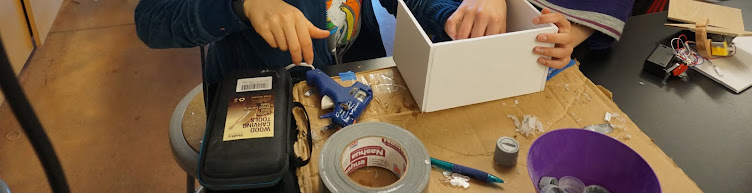
One of the most difficult parts of making the table was gluing the top onto the base. The tops of the large tins that serve as the main structure of the base are not flat, it is hard to get the glue to be strong with so little contact. Since there were no other adhesives I wanted to use on hand, I had to find a way to solve the glue problem. After some thought, I cut a piece of cardboard to size, and glued it onto the top on the tin. I then glued the top to both the cardboard and the edge of the tin. That worked pretty well.

If you were to try a project similar to this, I recommend that make a rough plan of your design after you get your materials but before you start building. That will likely make your process smoother and easier.

Through the process, I learned a lot about reuse, glue, and a bit about engineering. I think with my experience making this, I could do better if I tried a similar project in the future. If I had more time to work on this, my next step would be talking to others and getting them on board with reuse and up-cycling. In a way, I’m doing that with this blog.

Depending on how much you are able to find in your trash, and if you have glue on hand, this project might be free! That is one of the things that makes it so cool.

Upcycled Fashion


The objective of our project was to reuse old clothes to make new “trendy” clothes. Our inspiration was seeing people throwing away perfectly good clothes when could just easily upcycle it, for example; when someone “throws away” a dress they could just make it into a top or/and a skirt.


One challenge we faced was not having clothes for the project. Since we didn’t want to spend money on the clothes because it would defeat the purpose of our project, we asked the people at our school if they had spare clothes they either don’t wear or don’t need anymore to bring it in, we also brought in some of our old clothes to upcycle.


In the process of our project we learned how to hand sew and how to manipulate the old clothes into new clothes. If we had more time, we would definitely upcycle more clothes and reach for bigger goals for the clothes we chose. If you do choose to do this project, make a plan for the things you’re going to upcycle, it’s better to see if you can improve on something before you start and mess it up and have no way of fixing it.


0$ spent on materials
3 hours spent on this project.